The Centrepiece
U-534
The Last U-Boat
One of only four surviving U-boats from World War II, and the only one ever raised from the seabed after being sunk in combat. U-534 is the extraordinary heart of the Battle of the Atlantic Story.
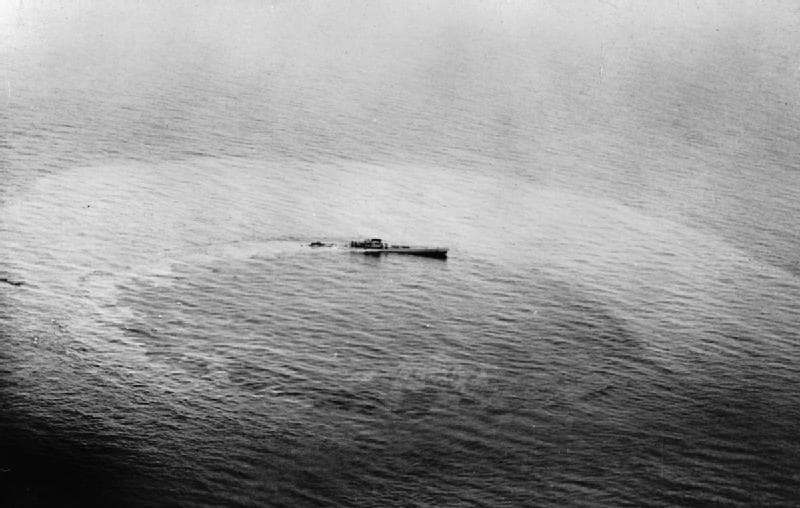
Background: a German U-boat at sea, 1939–45 · © IWM C 3780
An Extraordinary Survivor
U-534 was built at the Deutsche Werft shipyard in Hamburg, launched in September 1942, and commissioned that December under the command of Kapitänleutnant Herbert Nollau. As a Type IXC/40 ocean-going submarine, she was designed for long-range patrols across the full breadth of the Atlantic - capable of reaching the Caribbean and beyond without refuelling.
Unlike many of her counterparts, U-534 did not achieve any confirmed sinkings of Allied ships. By the time she became fully operational, the tide of the war had shifted. The Allies had developed devastating countermeasures: radar, the Leigh light, ASDIC, improved depth charges, and - crucially - the breaking of the Enigma codes. U-534's lack of success reflects this broader strategic reality.
What makes U-534 unique among the four surviving U-boats worldwide is her fate: sunk on 5 May 1945 - just two days before Germany's surrender - and recovered from the seabed 48 years later in a remarkable engineering achievement. She is the only U-boat ever raised after being sunk in combat.
Technical Specifications
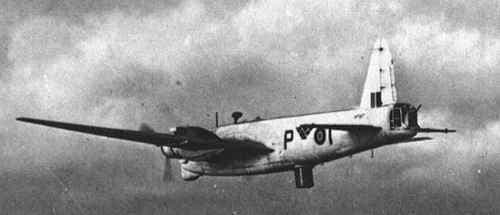
Aircraft like this stripped U-boats of the cover of darkness - the same Allied air power that would eventually catch U-534 on the surface.
Interactive Plan
Inside a Type IXC
U-534 packed around fifty men, six torpedo tubes, two diesel engines and enough fuel to cross the Atlantic twice into a steel tube less than seven metres wide. Select any compartment on the plan below - or tap the numbered markers - to discover what happened in every part of the boat, from the torpedo rooms to the galley.
Compartment 05 / 12
Control Room
Zentrale
The nerve centre of the boat, sealed by watertight bulkheads at either end. Here the helmsman and hydroplane operators held depth and course, the navigator worked at the chart table, and the chief engineer commanded the maze of valves, vents and pumps that made the boat dive, trim and surface.
Key Details
- 01Diving stations: flooding the ballast tanks took the boat under in under a minute
- 02The navigation periscope and main chart table were located here
- 03Depth gauges, trim controls and the "Christmas tree" of valve indicator lights lined every surface
Schematic plan based on published design studies of the Type IXC/40 ocean-going U-boat. Not to exact scale.
Timeline
The Story of U-534
Commissioned
Built at the Deutsche Werft yard in Hamburg-Finkenwerder, U-534 is launched on 23 September 1942 and commissioned into the German Kriegsmarine three months later as a Type IXC/40 ocean-going submarine, under Kapitänleutnant Herbert Nollau.
Atlantic Patrols
U-534 undertakes patrols in the North Atlantic and Bay of Biscay, including long weeks as a weather-reporting boat. By this stage the tide of war has shifted dramatically: Allied anti-submarine technology - radar, Huff-Duff, ASDIC - has given the hunter-killers a decisive advantage. U-534 achieves no confirmed Allied ship sinkings.
Last Voyage
As Germany's defeat becomes inevitable, U-534 is ordered north as part of Operation Regenbogen - a plan to scuttle the U-boat fleet to prevent capture. Freshly fitted with a Schnorchel and an enlarged flak battery, she leaves Kiel on 2 May 1945.
The Sinking
Just two days before VE Day, U-534 is intercepted by RAF Liberators from No. 86 Squadron in the Kattegat - the strait between Denmark and Sweden. Her gunners shoot one aircraft down, but a direct hit from a depth charge sends her to the bottom. Of the 52 crew, 49 survive.
Recovery
After nearly five decades on the seabed, U-534 is raised from 67 metres of water in an extraordinary salvage operation financed by Danish publisher Karsten Ree. She is the only U-boat in the world ever to have been recovered after being sunk in combat - a fact that gives her unique historical value.
The U-Boat Story
U-534 is moved to Birkenhead and becomes the centrepiece of the U-Boat Story museum. She is carefully sectioned to allow visitors to see inside her pressure hull, experiencing the claustrophobic reality of life aboard a wartime submarine.
Battle of the Atlantic Story
U-534 is reinterpreted and integrated into the new Battle of the Atlantic Story museum at Woodside, Birkenhead - alongside the collection of personal artefacts, diaries, letters, and photographs recovered with her from the seabed, offering an unparalleled insight into the German perspective on the campaign.
5 May 1945 · The Kattegat, 20 km north-east of Anholt
The Final Battle
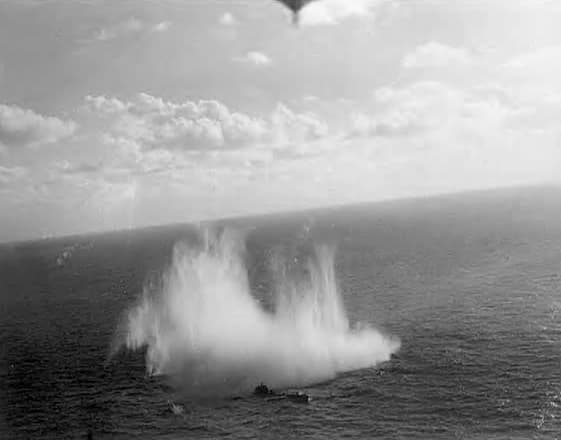
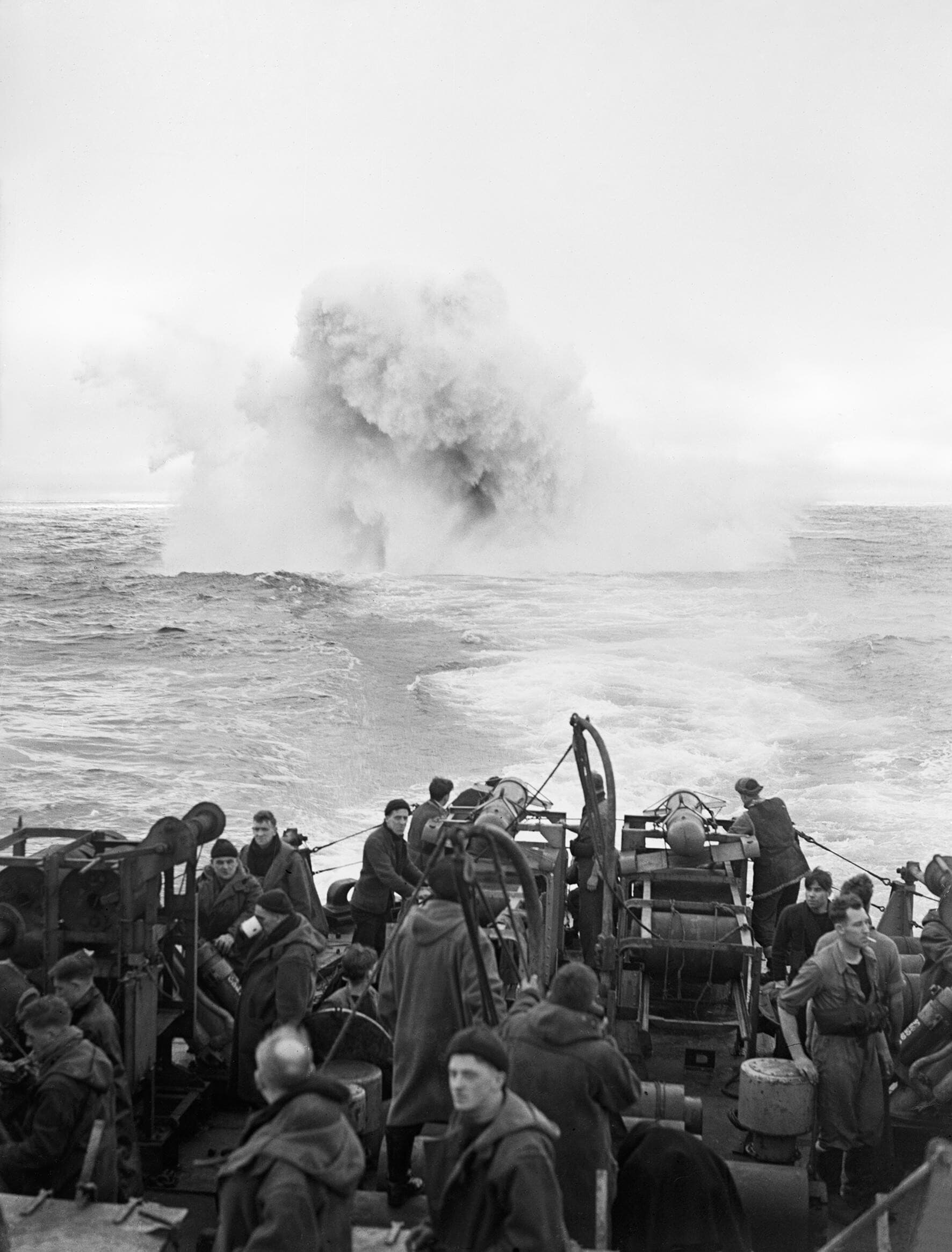
On 5 May 1945 - two days before Germany's official surrender - U-534 was running on the surface in the Kattegat, in company with two Type XXI U-boats, when Liberator bombers of No. 86 Squadron RAF attacked. Her gunners fought back, shooting one of the Liberators down, and nine depth charges fell wide. Then a single depth charge struck home near the stern. Mortally wounded, U-534 sank fast.
All 52 men aboard escaped the sinking boat - five of them trapped inside, who waited until she settled on the seabed 67 metres down and then swam free through the torpedo loading hatch. Three men did not survive the freezing water. The 49 survivors were rescued, and the war, for them, was over.
23 August 1993
Raised From
the Deep
In 1993, nearly five decades after her sinking, U-534 was raised from the seabed of the Kattegat in a painstaking salvage operation financed by the Danish publisher Karsten Ree - drawn by rumours of what her hull might contain. The recovery yielded an extraordinary collection of personal artefacts: letters home, diaries, photographs, board games, even a cocktail shaker - a deeply human record of life aboard a wartime U-boat.
Sixteen torpedoes were recovered with her, including at least three advanced T11 acoustic homing torpedoes - among the most sophisticated weapons of the war. One has been restored and will be displayed alongside the boat.
These items, preserved by the cold, dark waters of the Kattegat, now form the core of the U-534 collection - offering an unparalleled insight into the German perspective on the Battle of the Atlantic, and into the humanity of those who fought on both sides. For transport to her new home at Woodside, the boat was carefully cut into five sections, two of which were later re-joined - opening up cross-sections of the hull that let visitors see directly into the world of her crew.
Visit U-534 in Person
Opening in 2027 at Woodside, Birkenhead. Register your interest today to be the first to hear about tickets and opening events.